
This website uses cookies to improve your experience. We'll assume you're ok with this, but you can opt-out if you wish. Read More

Looking for quick tips to help you with your study abroad planning? You’ll learn everything from when to start looking for apartments to visualisation.
I’m familiar with the feeling of being lost and confused on how to properly prepare for my study abroad. I felt as though my university left me in the dust. I searched high and low on Google search (I even went as far as clicking ‘next page’ – I mean, who does that for Google?). And honestly, don’t tell anyone this but.. I even tried Bing (I know right?… never again).
Well, now that I’m a veteran in study abroad planning, I’m here to give you the big sisterly advice that I was looking for, condensed into ten top tips! These are things I have done, but also what I wish I did to fully maximise my time spent in Paris. Anyway, enough dwelling on should haves and could haves – let’s jump right to it!
This post is all about the best study abroad tips and advice to help you feel more prepared than ever.
The early bird catches the worm, so start looking ahead! The reason why I suggest this is because I found during my search that many of the gorgeous apartments had already been booked. I thought at first it was just an extended tenancy, but the availability times would suggest otherwise; for example, I found a beautiful, spacious apartment with glorious storage (rare for Paris) that was available from September to January, yet February was booked.
Some apartments had even been secured two years ahead. So, if the rental website that you’re using allows you to book ahead, don’t wait, just do it.
I used Paris Attitude because it’s a better version of AirBnB in France, and more cost effective – but not necessarily much cheaper. Most importantly, bills are included which saves a lot of hassle in the long-run. I never had to worry about wifi or energy bills since it was already included in my rent, which did mean I had to pay more, but in my opinion, it was worth it. Seeing as the rent was at a fixed rate, I never had to worry about my water or electricity usage.
Another reason why you should be looking in advance is to get a good look at the market. You will have a better understanding of which areas are cheaper or more expensive, and it will also give you time to reflect on where you would like to really stay.
Looking ahead presents you with more options than last minute searching. The latter only gives you a pounding headache.
Moreover, if you change your mind on your preferred living situation (alone, with friends, or in a crous) you are still left with ample time to change course and continue looking!
If you’re anything like me, packing is a nightmare. I love feeling prepared, which is why I’m always packing my entire house wherever I go – you want to avoid this, though.
I wasn’t wise enough to vacuum pack my clothes because I honestly forgot that it was even a thing. It definitely would’ve helped save a lot of space, energy, and tears.
You can find a vacuum pack in Primark, Amazon, Ikea, B&Q for about £5 depending on the size, but this is definitely something you should utilise if you’re low on manpower and can’t carry 6 luggages on the Eurostar (or can’t afford to pay extra if you’re travelling by plane).
My journey to Paris wasn’t as taxing as my journey back because I decided to pack light. I had worked over the summer to save up for my rent but also set some money aside for my birthday and for clothes.
If you can afford to do this, I highly suggest buying a few new pieces when you arrive there.
One, because it’s a great way to explore your city, get your bearings, and spend time with those who go with you. If you go alone, then it’s the perfect opportunity to familiarise yourself with the area.
Two, you will feel more like the locals if you are shopping where they shop and dress how they dress! If you ever feel imposter syndrome, or a little out of place, this is a more superficial way to handle it.
If you do take my advice, don’t listen to me too much. I over shopped when I was in Paris which meant I needed a lot more manpower and luggages to help me carry everything I bought while living there for the past year. That’s when you go back to tip 2, because trust me, you’ll need it.
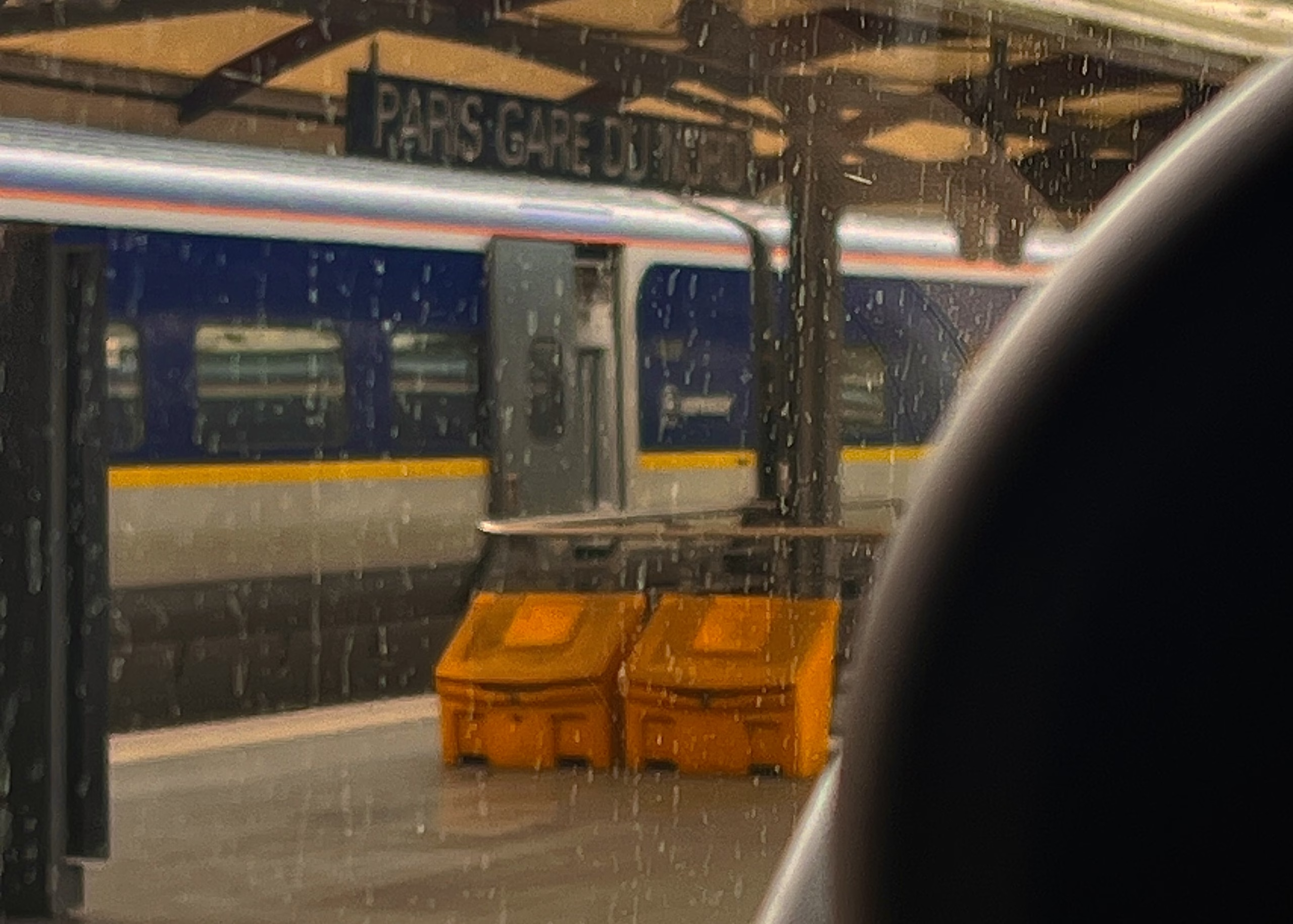
When I bought my ticket to go to Paris (Eurostar), I made sure that my return wasn’t for Christmas, but for when I was returning home for good. This definitely saved me a lot of money considering I was travelling two weeks before the Olympics started.
I would suggest, if you have the means of course, for you to buy your tickets for Christmas, Easter (or even reading week) a month in advance. I recognise that this isn’t easy, but also, I don’t recommend going home too often.
Don’t forget that you are abroad for a reason. Learning languages is difficult so you really want to maximise your time being there, and stay in the country for as long as possible.
Lastly, invite your family to come too! It’s really special being abroad with your family and this opportunity should be something to take advantage of, even if they can only come once. It definitely rejuvenated my spirits when my family came to visit me, even if I didn’t realise it.
You’re going to need cash – a lot of it. I relied on cash a lot while I was there. I liked to use it when tipping waiters at the bar, or to buy petty things on the street in a book market. Paris has a lot of on street markets, and you may feel safer using cash to pay for things there.
Also, if you ever take a taxi/uber you can pay them with cash. This was my preferred option as sometimes when you pay by card, the charge can increase if the driver decides to take a longer route and scam you.
Lastly, when changing your pounds into euros, please don’t do it at the Eurostar, it’s extortionate. My mum would change currency at Tesco for a semi-reasonable exchange rate, so that’s the only place I would suggest.
Don’t do it in the country you go to either. The places you may go to exchange the currency will most likely have extortionate rates because their customer-base is naive tourists.
My mum bought all the adapters on Amazon, which was really useful. I think Boots sell some too, they’re really easy to find. There are different kinds like the universal plug with every plug type on there (I don’t like that one); there’s one that’s bulky and another that’s flat.
Buying in advance gives you the opportunity to decide which style best suits your needs rather than not being able to charge your phone when you get there because you forgot to get one on the way. It’s best to just get all your essentials before you travel as you will be exhausted when you arrive.
Buy at least 3-5 adapters to have with you when you’re there, this is accounting for carrying one when you go onto campus to study, or if you have friends over and they don’t have the EU style plug.
With that being said, 3 is the minimum if you get an extension plug, but ultimately it just depends on how big your flat will be anyway. I had a 1-bed apartment, so there were a lot of sockets that I could plug my devices in.
When the semester ended, I often found myself wandering, not knowing what to do with myself. For you to avoid this, you should be engaged with the local culture more. Look on your local council website or if you’re in France, click here to have access to their government website which promotes activities and events.
You can also download the fever app on the App Store or Google Play Store, they have many candlelight concerts or festivals which take place. I also strongly recommend going to local theatres and watching their performances. I wish I didn’t let my fear of not understanding and wasting money get in the way, regardless it’s an amazing experience and is a good way to meet new people who have similar interests as you. You’d also be surprised how many people are tourists wanting to enjoy the local culture and build community.
Planning things in advance will give you something to look forward to, and also keep you from being bored. In cities like Paris, there’s so much to do yet nothing all at once.
It is so overwhelming with all of the quirky stores and events yet engaging. It took a while for me to get my bearings but once I was familiar with the city it made my experience much more enjoyable.
By going to places like the theatre, or jazz bars, you get a chance to talk with the locals who can direct you to their top spots too. So make sure to take the time to plan your itinerary for when school is out, especially if your friends are going home for the holidays.
I preferred to use Monzo rather than my Barclays abroad because there are no transaction fees. It was also easier to track my spending and see how much the euros is compared to the pound which was helpful when grocery shopping and making comparisons.
Paying rent was also much easier as it was considered an international transaction everytime I paid. When I received my deposit back, I gave my landlord my Natwest account, and the transaction fees taken were absolutely ridiculous. It was daylight robbery. So, I definitely recommend using Monzo as you may have a different (and hopefully less disappointing) experience.
Monzo is definitely preferred over Revolut because it is authorised and regulated by the FCA (Financial Conduct Authority) and protected by the FSCS (Financial Services Compensation Scheme) whereas the latter is not, so if anything happens to your money they are not legally liable to help you.
In fact, Revolut is not even considered a bank but an e-money institution, so your money is not covered by the FSCS.
Culture shock is something everyone will experience regardless of how much you prepare, but it’s still good to be aware, just to soften the blow. Be open minded of the local cultural requirements and customs so that you don’t offend the locals or disadvantage yourself.
One thing that came as a shock to me was the amount of cafes that did not allow computers. There aren’t as many study cafes in Paris as there are in London. I ended up having to study in the bistros as I could stay there till midnight to get my work done.
Another thing is how early the university campus and libraries close – like, really early. They close at 8pm which is so unfamiliar to me since my university has a 24 hour library. In Paris however, they don’t open their libraries until 10am (well, where I was staying at least). It definitely took some getting used to, but eventually I just stopped going (even before I lost both my library cards) because it was inconvenient to how I liked to plan my day.
Visualisation is very important. You will feel quasi-prepared and you won’t go into it completely blind. Watching walking videos of the area I was going to live in, or where my university campus was at, helped alleviate any unnecessary stress. I could gauge from the busyness of the streets that it was a safe area, and that was enough for me.
Doing this will also help mentally prepare you for where your local grocery store is, where the nearest cafe or library you can study at will be. It’s all part of the excitement as you can plan where you want to eat at first. As someone with a poor sense of direction, this helped me a lot. I mean, I still got lost, but at least I didn’t panic!!!
In all, there’s only so much you can do to prepare to make you feel somewhat settled in. Don’t worry if you’re feeling like a fish out of water and it’s taking you a while to find your footing – it’s a growth process.
I hope you take these tips to help you, but most of all, I hope you enjoy your time abroad! Take advantage of it, and don’t spend too much time stressing and worrying, it will all work out for the better.
This post was all about the best study abroad tips to help you plan. Share this post with a friend to help them out!


This website uses cookies to improve your experience. We'll assume you're ok with this, but you can opt-out if you wish. Read More
Cookie Settings